
Master Time Server
Specify a central timing appliance around the reference inputs and output formats your equipment requires. HC Electronics reviews master time server enquiries within its clock-server range, with the proposed hardware identified by its fitted interfaces and supported functions.
For a purchase involving several timing connections, bring the requirements together in one equipment specification. Define what the server must receive, what it must deliver and which functions must operate simultaneously.
A Defined Reference and Output Configuration
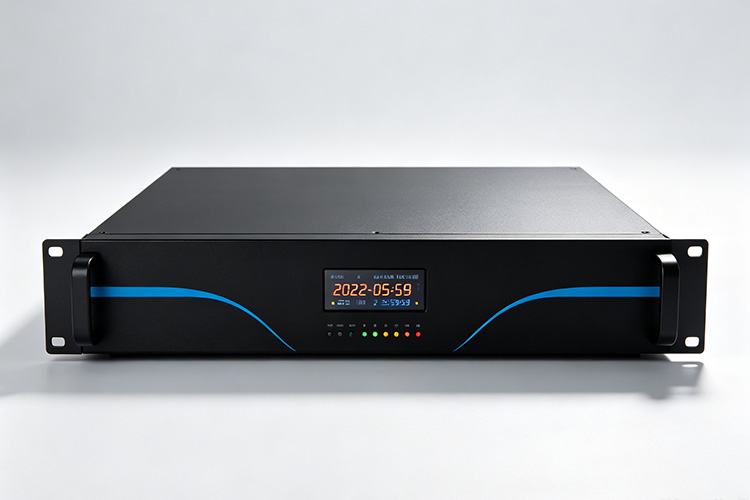
A master time server purchase should identify a complete hardware configuration, not simply a product-family name. Time-server appliances can be offered with different combinations of network interfaces and optional signal outputs, making the fitted configuration important when comparing equipment.
Start with the input specifications of the devices that will receive time. Where you need both a network time service and a dedicated timing signal, submit both requirements for assessment.
Identify which interfaces are essential at delivery and which are intended for possible future use. Request confirmation of the combination available on the proposed appliance, including any restrictions on simultaneous operation.
Document Each Required Timing Connection
Use an interface schedule to associate every required function with a connection on the offered server. This makes the equipment specification easier to approve and the delivered configuration easier to check.
| Connection Requirement | Details to Include |
|---|---|
| Reference acceptance | Source equipment, input format and any receiving components required with the server. |
| Network time delivery | Required service and the interfaces on which it must be available. |
| Dedicated timing outputs | Required signal or message format, connector, electrical characteristics and receiving-device specification. |
| Concurrent operation | Outputs that must remain available together under the agreed operating conditions. |
| Time information | Required time scale, date information and any permitted offset for each applicable output. |
| External indication | Any required alarm connection or machine-readable indication of reference availability. |
For dedicated outputs, include the complete interface requirement rather than a connector name alone. Ask for the connection assignment and signal description to be supplied with the proposed configuration.
Where additional conversion equipment is needed, have it identified separately. The quotation should distinguish a function available directly from the server from one that depends on another device.
Specify the Time Carried by Each Output
For equipment using more than one timing format, confirm the time information delivered through each interface. A network service, a serial time message and a front-panel display should not be assumed to use identical presentation settings.
NTP time is based on UTC, while the treatment of local-time display settings belongs to the relevant device implementation. Include the required time scale and any output-specific offset in the purchase specification.
Where your equipment specification includes leap-second handling, request the supported behaviour for each relevant output. Mixing ordinary UTC handling with a different adjustment policy can create disagreement between time sources or receiving devices.
For product approval, ask for these settings to be recorded alongside the interface configuration. This is especially useful when several outputs serve equipment with different input conventions.
01 / REFERENCE
Reference Selection and Changeover Requirements
A second input should have a defined purpose. State whether it is intended as an alternative reference, a monitored comparison source or an input selected manually by an operator.
Ask how the proposed appliance identifies its active reference and what conditions cause it to stop using that source. Where automatic changeover is required, specify whether returning to the preferred reference should happen automatically or require approval.
Multiple sources do not eliminate every timing risk. Sources can disagree or share a common dependency, so source availability and source validity need to be considered separately.
Keep the acceptance requirement focused on the appliance: what it detects, which source it selects and how its outputs behave during the transition. Any required changeover performance should be documented for the quoted hardware and firmware.
02 / HOLDOVER
Timekeeping During a Reference Interruption
Specify the interval for which the server must continue providing acceptable time after its reference becomes unavailable. This requirement is separate from maintaining electrical power.
The internal oscillator influences how a time server maintains time during reference loss. A holdover claim should therefore be associated with the actual oscillator and hardware configuration, not applied to every version of a product.
For the offered unit, request the permitted timing error over the required interruption period. Include the operating temperature range and any preparation or stabilization conditions associated with the measurement.
Also establish what happens when the permitted error or interruption duration is exceeded. Ask whether the appliance changes its status, raises an available alarm or alters its timing outputs. The accepted behaviour should be clear to the people responsible for maintaining the equipment.
Approve the Supplied Hardware Build
01
Request a configuration record identifying the base appliance, receiving hardware, fitted output options and applicable firmware. Any oscillator option associated with an agreed performance requirement should appear in that record.
02
For equipment acceptance, evaluate the required functions together. An output demonstrated separately does not establish that the complete requested combination meets the purchase specification during simultaneous operation.
03
Include enclosure dimensions, electrical input and access requirements in the approval documents. Identify external receivers, connection accessories and mounting components separately from the main unit.
04
Where a later hardware substitution is proposed, review its effect on the accepted interfaces and performance before shipment. Keep the final configuration associated with the order and equipment identification.
Master Time Server Purchasing Questions
Does a dual power supply make the timing hardware fully redundant?
No. Two power supplies address a different requirement from duplicate receiving hardware or independent timing processing.
Specify the failure condition your purchase must tolerate. Ask which components remain shared and what continues operating after the stated failure. Do not treat a dual-power description as confirmation of complete timing redundancy.
Can different outputs use different reference sources?
Include the required source-to-output relationship in your enquiry. Ask whether reference selection applies to the entire appliance or can be assigned separately to particular outputs.
Where independent operation is essential, request confirmation of the supported arrangement. Several output connectors should not be treated as evidence of several independent timing references.
Can a required interface be added through a firmware update?
Do not assume that it can. Ask whether the function requires fitted hardware, an enabled software option or both.
For an interface needed at delivery, include it in the accepted equipment configuration rather than relying on a possible future update.
Request a Master Time Server Quotation
Send HC Electronics your reference-input requirements and a list of the timing outputs needed from each appliance. Identify which outputs must operate together, any required source-changeover behaviour and the permitted timing error during reference interruptions.
Include the number of units, available power and equipment-space restrictions. Request a proposal that identifies the supported configuration, supplied components and performance information relevant to your purchase.