

NTP Clock Server
Provide compatible network clocks with a dedicated source of NTP time. HC Electronics supplies NTP clock server hardware for equipment purchases requiring a local network time service, with the reference input and server configuration selected for the intended receiving devices.
Specify the clocks the appliance must serve, the time reference available to it and any mandatory network requirements. Request a hardware proposal that identifies the NTP service included—not simply an Ethernet-connected device.
Request NTP Server Specifications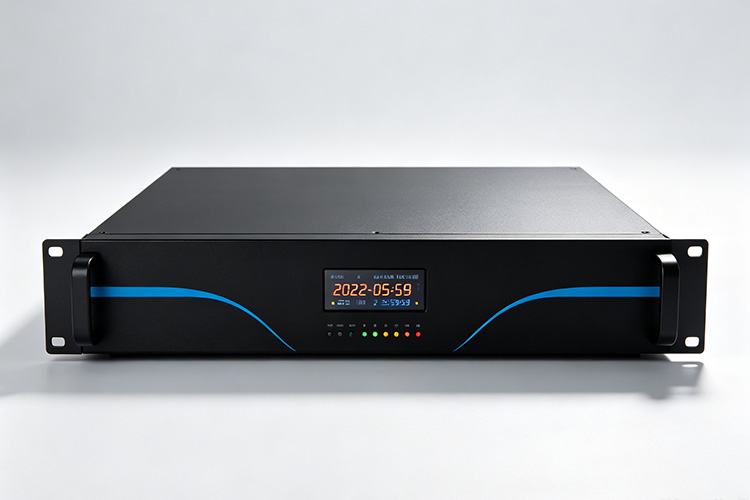
Hardware That Serves NTP Time
An NTP clock server must provide time responses to clients. A device that uses NTP to synchronize its own internal clock does not necessarily offer an NTP service to other equipment; receiving time and serving time are separate functions. RFC Editor
For your purchase, identify the client models and their supported NTP or SNTP versions. Include any requirement for a particular communication mode or authenticated time service so compatibility can be assessed against the proposed appliance.
The accepted specification should identify the hardware model, firmware version and enabled server functions. This gives your technical team a defined product to evaluate and your purchasing team a clear description of the equipment being ordered.
Define the NTP Service Required
Review the service available on the quoted hardware rather than relying on a general network-interface description.
| NTP Service Requirement | Details to Establish |
|---|---|
| Protocol support | NTP versions served and compatibility with the intended NTP or SNTP clients. |
| Operating mode | Supported client-server communication and any other mode explicitly required by existing equipment. |
| Address family | IPv4 or IPv6 requirements and support on the proposed server interfaces. |
| Service interfaces | Which physical network ports can provide NTP, including any restrictions on simultaneous operation. |
| Request handling | Documented response capacity, applicable rate limits and behaviour under the expected client demand. |
| Authentication | The supported mechanism, where required, and the client configurations with which it has been verified. |
For an authenticated NTP purchase, name the required mechanism explicitly. Network Time Security, for example, requires compatible NTS implementations; ordinary NTP support does not establish that capability. Have the accepted server-side requirement recorded with the offered firmware version. RFC Editor
Specify the Server’s Reference Input
The appliance needs an identified reference from which to establish its time. NTP servers may obtain that reference from other NTP servers or from directly connected reference equipment, depending on their implementation. RFC Editor
Tell HC Electronics whether the proposed unit must follow an existing organizational time source or include its own receiving hardware. Request the corresponding input specification and identify any external components needed for normal operation.
For a network-isolated purchase, state whether the appliance must operate without access to an external network time service. For equipment using an existing reference, provide the source’s interface and operating requirements.
Where several reference inputs are required, ask which are supported by the offered configuration and how their operating status can be checked. Additional inputs and automatic source changes should be confirmed as product functions, not inferred from the number of connectors.
Evaluate the NTP Response Performance
A useful acceptance specification measures the service delivered to clients. Define the permitted time difference, the measurement reference and the conditions under which the proposed server will be evaluated.
Include the expected client count and request frequency. For an order replacing an existing appliance, provide any available information about request bursts or peak demand. Ask for response-capacity results that correspond to the offered configuration, including authentication where applicable. Authentication processing can affect achievable request throughput. RFC Editor
Distinguish time accuracy from service availability. An appliance answering requests is not, by itself, evidence that those responses meet the required timing tolerance.
For evaluation, request results that identify the reference source, test load, hardware revision and firmware. Keep any receiver-component accuracy figure separate from the measured performance of the NTP service.
Administration and Service Status
Choose the appliance with the people maintaining it in mind. Ask how authorized staff can inspect its synchronization condition, change approved settings and retrieve diagnostic information.
Useful information to request includes reference availability, current synchronization status, NTP request activity and recorded service interruptions. Monitoring synchronization and operating logs is part of established NTP operational practice; the actual indicators and reporting methods must be confirmed for the selected appliance. RFC Editor
Where your organization has defined administration requirements, include them in the enquiry. Specify the required access method, account controls and configuration backup or restoration functions.
Also establish the firmware-maintenance process: how updates are obtained, who can apply them and whether updating interrupts the time service. Request the applicable support arrangements rather than assuming them from the hardware description.
Approve the Appliance and Included Components
For the physical unit, request the enclosure dimensions, mounting provisions, electrical input and operating-temperature range. Include any equipment-space or power constraints that affect which version can be installed.
The quotation should distinguish the NTP server itself from optional receiving equipment, power accessories, mounting parts and licensed functions. Identify any components your organization will retain so they are not unnecessarily included in a replacement purchase.
Ask for operating instructions applicable to the supplied version and a record of any agreed factory settings. These should accompany the product specification used for approval.
NTP Clock Server Purchasing Questions
Does a Stratum 1 rating guarantee a particular accuracy?+
No. Stratum identifies a server’s position relative to its reference source; it is not a measurement of the accuracy delivered to your clients. Request a stated timing tolerance with the reference, network conditions and measurement method used to establish it. NTP: Network Time Protocol
Can a replacement server retain our existing NTP service address?+
Include this as a replacement requirement. Ask whether the proposed appliance supports the required address configuration and can provide the service expected by the existing clients.
Your network administrator should approve the address reassignment. Retaining an address does not replace the need to verify protocol, authentication and service compatibility.
Will the server provide valid time immediately after a restart?+
Request the documented start-up behaviour for the offered model. Establish when it begins answering NTP requests, how it reports that a valid reference has been acquired and which configuration settings survive a power interruption.
Include any required recovery time in the acceptance criteria. Initial network availability and readiness to provide an accepted timing reference should be checked separately.
Request an NTP Clock Server Quotation
Send HC Electronics the required appliance quantity, client equipment details and intended reference source. Include your NTP version, address-family and authentication requirements, together with the expected request load.
For a replacement, provide the current server specification and identify the service settings that must be preserved. We will review the requirements and discuss the proposed hardware, supported NTP functions and items included in the quotation.
Request an NTP Clock Server Quote