
Courtroom Clock System
Make the time easy to see from the judge’s bench, counsel tables and the waiting area outside the hearing room. A courtroom clock installation should provide a consistent reference without drawing attention away from the proceedings.
HC Electronics supplies synchronized clocks and configuration support for facility projects. For courtrooms and associated spaces, we review display placement, viewing conditions and the approved timing connection around the way each room is used.
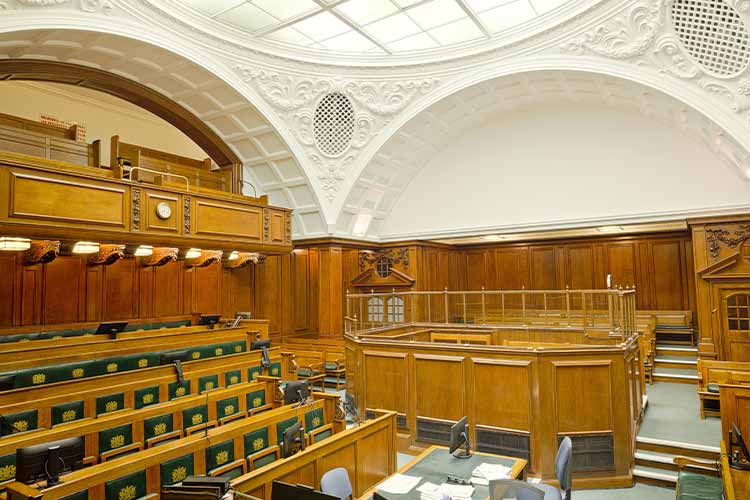
A Consistent Reference for Hearings and Recesses
Scheduled hearings, recesses and the movement of people between waiting areas and courtrooms create a practical need for visible, coordinated time. Synchronized displays help staff and participants reference the same time rather than independently adjusted clocks in different rooms.
Consider an announced return time after a recess. A person waiting outside the hearing room should not have to reconcile a corridor clock with a different reading inside. Plan those two viewing locations together so the transition between them preserves a consistent reference.
The clocks support awareness of the schedule; they do not announce changes to it. Instructions from court personnel and approved hearing information remain separate from the time displayed on the wall.
Plan Visibility from the People’s Positions
Courtroom layouts place judges, clerks, counsel and spectators in different viewing positions. Equipment placement needs to preserve essential courtroom sightlines between participants and presentation material. Assess the clock from those positions rather than choosing its location solely from an empty wall.
| Viewing Position | What to Review |
|---|---|
| Judge’s bench | Whether the clock can be read from the normal seated position without looking behind the bench or around a monitor. |
| Clerk and court reporter positions | Whether the time remains visible with workstation screens, documents and recording equipment in place. |
| Counsel tables and lectern | Whether seated and standing users can read the display without turning away from the person addressing them. |
| Public seating | Whether the intended viewing area has a clear reading without the clock obstructing signs, screens or courtroom features. |
| Waiting and consultation areas | Whether people can check the time before returning to the hearing room without entering it just to see a clock. |
| Judicial and staff support rooms | Whether the display is useful from the actual working position and consistent with the reference used in the associated hearing room. |
Mark the principal viewing positions on a room sketch. A display facing the bench may not be visible to people seated beneath it, so assess whether another approved position is needed.
Keep the installation proportionate to the room. The aim is adequate visibility for the intended users, not a clock on every available wall.
Keep the Display Clear and Unobtrusive
Readability During Presentations
Evaluate the clock under both normal lighting and the settings used when presentation screens are active. Courtroom lighting design must consider glare, contrast and changing visual tasks; clock selection should fit those conditions rather than compete with them.
For a digital display, specify the time format and whether seconds have a defined use. Review the available brightness settings on the proposed model. Avoid adding date information or other readings when they make the essential time harder to identify.
For an analog display, assess the face and hand contrast from the intended seats. A familiar dial can be considered alongside the room’s interior, but appearance should not take priority over readability.
Sound During Quiet Proceedings
Speech intelligibility is an important courtroom design consideration, and background noise can interfere with it. Include the clock assembly in the room’s acoustic review where quiet operation is required.
Evaluate the selected movement, electronics and power accessories during a quiet-room check. Neither an analog face nor a digital display establishes silent operation by itself. Any specified noise performance should be supported by information or testing for the proposed equipment.
Coordinate the Hearing Room and Its Associated Spaces
Define a small group of related locations around each courtroom: the hearing room itself, its approved waiting positions and the staff spaces involved in preparing or administering the session.
For each group, agree the local-time convention and preferred display format. Keep AM and PM unambiguous where a 12-hour presentation is used. Where different clock styles are proposed, confirm that they can follow the approved reference while retaining the appearance needed in each room.
Ask the court’s technical team which existing timing service or clock connection may be used. A new central controller should not be included simply because several displays are required.
Start with the installation scope permitted by the court’s facilities and procurement requirements. Confirm approval before specifying a courthouse-wide arrangement; court-specific guidance can place restrictions on building-wide clock systems.
Refresh Clock Installations Between Hearing Sessions
For an occupied courthouse, organize replacement work around room availability rather than treating every courtroom as accessible throughout the project.
Begin with the locations where the existing time display is difficult to read, inconsistent with nearby clocks or inconvenient to maintain. Identify which equipment and connections can be retained, subject to compatibility review.
For rooms with finished joinery, historic surfaces or fixed presentation equipment, have the proposed mounting position approved before work begins. Agree the treatment of visible cables and any unused fixing points so the completed installation fits the room rather than appearing as a temporary addition.
Use an available hearing room to review the proposed display before repeating the arrangement elsewhere. Include the judge’s and clerk’s viewing positions, counsel seating and the public-facing location. Differences between room layouts should remain visible in the equipment schedule.
Allocate installation and testing to approved access windows. The quotation should distinguish the clock equipment from mounting work, electrical provision and any changes to the existing timing connection.
Check Each Room Before It Returns to Use
A courtroom clock should be accepted in its finished setting, with furniture, screens and normal equipment in position.
Have the designated staff review the reading from the agreed seats. Check whether an open door, raised presentation screen or temporary lectern blocks a display that appeared satisfactory during installation.
Compare the hearing-room and associated waiting-area clocks with the approved time reference. Establish a suitable acceptance tolerance rather than judging them only by whether their readings look similar at a glance.
Also agree the checks required after a power interruption or loss of the reference. Identify who confirms that the clocks are ready for use again, particularly where a display continues running while its synchronization status is uncertain.
Retain the accepted room layout, display settings and relevant equipment details. These records help facilities staff assess later changes to furniture, lighting or clock positions without starting the review from the beginning.
Courtroom Clock Questions
Can one display serve the bench and the public seating?
That depends on the room’s geometry and the display position. Review both views with the furniture in place. A clock clearly visible from the bench may face away from people seated on the opposite side of the room.
Where another display is necessary, specify its intended viewers and keep both readings aligned with the approved reference.
Can the clock show the time remaining for an oral argument?
Include that as a separate requirement. A time-of-day clock and a speaking-time countdown perform different functions.
Ask whether the proposed equipment supports the required countdown, how authorized staff would control it and whether the time-of-day reading must remain visible. Do not include an argument-timing function in the accepted scope unless the necessary equipment and controls have been confirmed.
Does the wall clock establish timestamps for hearing recordings?
The proposed clock installation provides visible time for people in the room. It does not, by itself, configure recording equipment, certify timestamps or validate an electronic court record.
Any requirement involving recording timestamps or case-management software should be reviewed separately by the court’s authorized technical team.
Plan Your Courtroom Clock Installation
Tell HC Electronics which courtrooms and associated waiting or staff areas need displays. Provide a room sketch showing the principal viewing positions, preferred clock appearance and any restrictions on mounting or visible connections.
Include the approved time reference, permitted installation windows and the people responsible for room acceptance. For initial discussions, a simplified layout without case information or sensitive facility details is sufficient.
Request a courtroom clock proposal focused on readable time, appropriate placement and an installation that respects the working environment of the court.