
GNSS Time Server
Select a satellite-referenced server with the receiver configuration and timing outputs your equipment requires. HC Electronics offers GNSS time server hardware within its clock-server range, with the proposed equipment reviewed against your satellite-reference and interface requirements.
Define the required constellation support, operating mode and outgoing time service together. Request a quotation that identifies the receiving hardware supplied with the appliance and the functions available in that configuration.
Request GNSS Time Server Details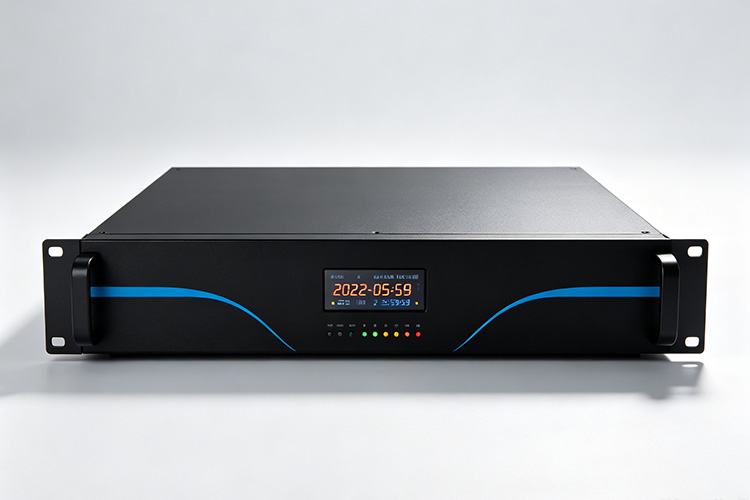
Match the Receiver to Your Constellation Requirements
A purchasing specification may require particular satellite systems rather than an unspecified satellite reference. GNSS includes GPS, BeiDou, Galileo and GLONASS, but the term does not identify a particular receiver configuration.
State which constellations the server must accept and whether they must operate together. Also identify any requirement to restrict reception to an approved subset.
Supported, enabled and required are different parts of the specification. A receiver’s full capability list should be distinguished from the operating configuration supplied with your server. Receiver variants can also differ in supported signals and frequency bands, even within the same product family.
| Receiver Selection Item | Requirement to Record |
|---|---|
| Required constellations | Satellite systems that must be available for the intended timing operation. |
| Operating combination | Whether the requirement calls for concurrent reception, selectable operation or a restricted constellation set. |
| Signal coverage | Required signals and frequency bands, with confirmation for the fitted receiver. |
| Configuration control | Whether permitted satellite systems can be selected and how the approved settings are retained. |
| Delivered receiver version | Receiver identification, firmware and any options associated with the accepted specification. |
Ask for the proposed equipment’s supported configuration to be stated explicitly. A general constellation list should not replace a model-specific response to your requirements.
Connect the GNSS Reference to the Required Server Outputs
The receiving hardware establishes the satellite reference; the server must also provide the service or signal accepted by your downstream equipment. An NTP service, for example, requires a server implementation that supplies time to compatible network clients—not merely a receiver capable of producing timing information.
Identify the required outputs in your enquiry, including their interfaces and the equipment they will serve. Request confirmation that the quoted appliance provides those outputs while operating in the specified GNSS mode.
For additional physical timing connections, include the receiving device’s input specification. Have each required output identified as fitted, optional or dependent on a separate accessory.
Approve the Receiving Accessories for the Selected Signals
The antenna and components between it and the receiver must accommodate the signals required by the configuration. GNSS antenna bandwidth and receiver input characteristics are relevant to signal reception; matching the connector alone does not establish suitability.
For a new server package, request the approved antenna and receiving accessories for the selected constellation and frequency requirements.
When retaining an existing antenna installation, provide the antenna identification and details of any splitter, filter, surge protector or extension component in the signal path. Ask which parts can remain and which would need replacement for the proposed receiver.
Keep those accessory decisions associated with the approved GNSS configuration. A receiving package evaluated for one signal combination should not automatically be treated as suitable for a different combination.
Review the Receiver Information Available to Operators
Ask how the appliance reports its GNSS configuration during operation. Your team should be able to establish what the reported information represents before relying on it for maintenance or acceptance.
Request details of any available constellation-level information, receiver status or diagnostic records. Establish whether the interface reports configured satellite systems, observed signals or information used to determine the accepted timing reference.
A summary satellite count may not answer a purchasing requirement that specifies particular constellations. Where verification of the active configuration is essential, ask which records or indicators the offered server can provide.
Include access to that information in the equipment evaluation. Do not assume that a receiver capability is visible through the server’s operator interface simply because it appears in the receiver documentation.
Evaluate the Server in the Required GNSS Mode
Product approval should use the satellite configuration intended for service. An evaluation performed with every available constellation enabled does not demonstrate a requirement that calls for a restricted operating set.
Request performance information associated with the selected receiver mode and the server output you will use. Identify the permitted timing error, measurement reference and relevant test conditions.
Where operation must continue after one permitted constellation becomes unavailable, make that an explicit acceptance requirement. Ask how the proposed appliance behaves, what information it reports and whether the remaining reference meets the agreed output tolerance.
Record the evaluated receiver settings alongside the hardware and firmware versions. This makes the acceptance result traceable to the equipment configuration being purchased.
GNSS Time Server Purchasing Questions
Does multi-constellation reception mean the server has redundant receivers?
No. A single receiver can process signals from multiple constellations. That capability does not establish that the appliance contains independent receiving hardware or duplicate timing-processing components.
Where hardware redundancy is required, specify it separately and ask which components remain shared.
Can support for another constellation be added after purchase?
Ask whether the proposed receiver already supports the required signals and whether the server permits that configuration. Adding support may involve more than changing a setting: receiver implementations differ in their radio-frequency hardware and signal-processing capabilities.
For a constellation needed from the start, include it in the accepted delivery specification rather than relying on a future update.
Request a GNSS Time Server Quotation
Contact HC Electronics with the required appliance quantity, constellation combination and timing outputs. Identify any restrictions on the receiving mode and any antenna equipment you intend to retain.
Include the available power, mounting requirements and acceptance criteria. Request a proposal identifying the server, receiver configuration, approved accessories and performance information applicable to your purchase.