
Synchronized Time Displays for Food Production, Packing and Staff Areas
Food Processing Synchronized Clock System
Food processing facilities need clear time visibility across production areas where employees work under structured schedules and controlled operating conditions.
From processing and packing zones to sanitation support areas, staff entrances and production offices, HC Electronics provides synchronized clock solutions for food processing facilities, helping operators plan visible time displays around cleaning exposure, moisture, mounting conditions and maintenance access.
A suitable food processing clock system should provide a consistent time reference while fitting the practical conditions of the area where each clock is installed.
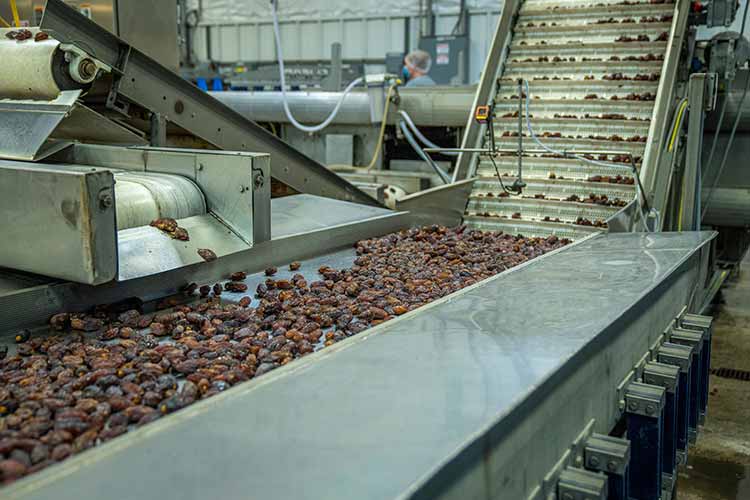
Why Food Processing Facilities Need Synchronized Clocks
Employees and supervisors working in different parts of the facility may need to reference the same current time during shifts, scheduled breaks and routine production activities. Synchronized clocks provide a common visible time reference across these areas.
Food plants often include several work areas operating at the same time
- Processing rooms
- Packing lines
- Ingredient preparation areas
- Finished-product handling zones
- Sanitation support areas
- Staff changing areas
- Production offices
- Maintenance spaces
They can support
- Shift awareness
- Staff coordination
- Production-area time visibility
- Break and return-time awareness
- Facility organization
The clocks provide time-of-day information. They do not replace process timers, batch controls, PLC timing or production-management systems.
Synchronized Clocks for Processing Areas
Clock selection should start with the conditions of the room rather than using one standard clock throughout the plant.
01
Processing Rooms
Processing areas may be exposed to:
- Moisture
- Steam
- Temperature changes
- Cleaning chemicals
- Dust or food particles
Before selecting a clock, describe the environment and cleaning procedure used near the proposed position.
Any requirement for moisture protection, enclosure sealing or a specific environmental rating should be confirmed for the exact clock model.
Do not assume that a clock is suitable for a processing room simply because it has a closed enclosure.
02
Packing Areas
Packing areas often have more regular workstations and longer sightlines.
Clock placement should consider:
- Operator positions
- Conveyor layouts
- Packing equipment
- Display screens
- Viewing distance
- Mounting height
A synchronized digital clock can provide a clear shared reference for multiple packing stations when positioned above the normal equipment sightline.
The clock should remain visible without interfering with production displays or safety information.
03
Ingredient and Preparation Areas
Preparation areas may have different environmental conditions from final packing areas.
Review:
- Cleaning frequency
- Humidity
- Wall availability
- Employee movement
- Equipment layout
Where walls are regularly cleaned, the mounting arrangement and cable entry should also be included in the product review.
04
Staff and Changing Areas
Employee entrances, changing spaces and break areas usually have less demanding environmental conditions than processing rooms.
These locations may use simpler clock configurations while still following the same facility time reference.
Typical positions include:
- Staff entrances
- Locker areas
- Break rooms
- Shift meeting points
The display should be easy to read when employees enter or leave the production area.
Review Cleaning Exposure Before Selecting Equipment
Cleaning conditions are one of the most important differences between food processing areas and ordinary commercial spaces. Before choosing the clock, establish how the area is cleaned.
Consider:
- Wipe-down cleaning
- Spray exposure
- Foam cleaning
- Chemical disinfectants
- High humidity
- Condensation
Provide the cleaning method and products used near the proposed clock.
Ask for information about the enclosure materials, front cover and permitted cleaning procedure for the selected model.
The clock should be evaluated as a complete installed assembly, including its bracket, cable entry and any power accessories.
Do not assume HACCP suitability, hygienic certification or washdown performance unless that property is documented for the exact product being offered.
Keep the Clock Away from Product Contact Zones
Clock placement should avoid areas where the equipment could interfere with food handling or introduce unnecessary maintenance activity near exposed product.
Where possible, place the clock:
- Above normal work areas
- Outside direct food-contact zones
- Where it remains visible without being touched during routine production
- Where maintenance can be carried out without disturbing nearby processing equipment
The final mounting position should be reviewed by the facility team responsible for hygiene and equipment placement.
Plan for Moisture and Condensation
Food processing environments can experience rapid temperature changes that create condensation.
This can occur near:
- Chilled rooms
- Wash areas
- Cooking processes
- Cold-storage entrances
- Humid production spaces
If condensation is expected, include it in the equipment enquiry.
Ask whether the proposed clock is suitable for that environment and whether mounting orientation, cable entry or ventilation affects its use.
Any claimed operating temperature or humidity range should be confirmed for the selected clock.
Make the Display Easy to Read in Production Areas
Production lighting and equipment can make a clock harder to read than it appears in a quiet office.
Consider:
- Viewing distance
- Digit size
- Mounting height
- Background contrast
- Lighting intensity
- Steam or visual obstructions
For large processing or packing rooms, evaluate the display from the actual operator positions. A clock should remain easy to identify among production screens, machine indicators and safety signage.
Use only the information employees need. Hours and minutes may be sufficient in many areas; seconds should be included only where there is a defined requirement.
Plan Maintenance Without Disrupting Production
A food processing clock may be mounted in a location that is difficult to access while the production line is operating.
Before installation, consider:
- Ladder or lift access
- Production shutdown requirements
- Hygiene procedures for maintenance personnel
- Access to the power connection
- Whether the clock must be removed for servicing
Choose a location that balances visibility with practical maintenance.
Keep a location record for each installed clock so maintenance teams can identify the correct unit and prepare any required access procedure before entering the area.
Separate Facility Time from Process Timing
A synchronized facility clock provides the current time.
Food processing operations may also use:
- Cooking timers
- Batch timers
- Conveyor timers
- Cleaning-cycle timers
- Production counters
These functions belong to process-control equipment.
A wall clock should not be treated as the timing device for a production process unless that function is specifically designed and approved for the application.
Keeping these roles separate helps avoid confusion between general facility time and process-specific timing.
Upgrade Existing Food Processing Clock Installations
Existing plants may already have clocks in processing rooms, packing areas and staff spaces.
Before replacing them, review:
- Current locations
- Cleaning exposure
- Environmental conditions
- Available power
- Existing timing connections
- Maintenance access
A clock that worked in a previous production layout may no longer be suitable after equipment or cleaning procedures change.
For retained clocks, identify which units need to remain part of the synchronized installation.
For replacement areas, confirm whether the existing mounting and cable arrangement are still suitable.
Food Processing Clock Questions
Can synchronized clocks be installed inside food processing areas?
Yes.
Where a suitable clock configuration is available for the environmental and cleaning conditions.
Provide details of moisture exposure, cleaning procedures, temperature and mounting location before selecting equipment.
Are food processing clocks waterproof?
Not automatically.
Water resistance depends on the documented environmental rating of the exact model. If a specific IP rating or washdown requirement is needed, state it explicitly and request supporting product information.
Can the same clock be used in packing rooms and wet processing areas?
Not necessarily.
Packing and wet-processing environments may have very different exposure conditions. Each location should be assessed separately.
Can synchronized clocks replace production timers?
No.
A synchronized clock primarily displays the current time. Process timers and machine-cycle timing should remain within the appropriate production equipment.
HC Electronics
Plan Your Food Processing Clock Solution with HC Electronics
Include approximate viewing distances, cleaning procedures, moisture exposure, available power and any environmental requirements.
We can review the application and discuss a synchronized clock configuration suited to the operational and maintenance conditions of your food processing facility.
Send HC Electronics a simple facility layout showing:
- Processing areas
- Packing zones
- Staff spaces
- Existing clock positions
- Proposed new locations