
Analog Synchronized Clocks
Keep a familiar dial-and-hand display while maintaining a shared time reference. HC Electronics analog synchronized clocks offer a clock-face option for installations where traditional hour and minute hands are preferred.
Select the clock as a complete assembly: the visible dial, hands, synchronized movement, enclosure and power arrangement. Start with the appearance and reading requirements, then confirm the receiving configuration available for that design.
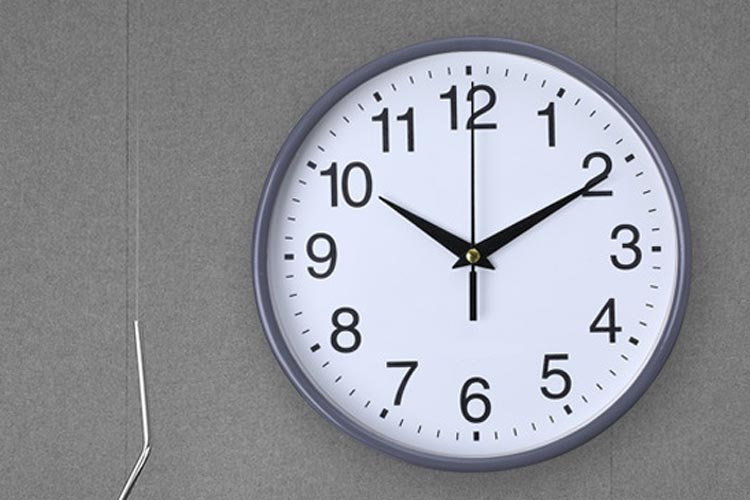
Choose the Clock Face
The face of an analog wall clock should suit the position from which it will be read. Describe the approximate viewing distance, mounting height and whether viewers will normally face the dial directly or approach it from an angle.
Specify the visible dial size separately from the overall frame dimensions. For a clock that must fit a defined wall space, request a front-view drawing showing both measurements.
| Clock-Face Detail | Your Selection Requirements |
|---|---|
| Dial diameter | The required visible face size and maximum overall clock dimensions. |
| Hour markings | Preferred numerals or hour markers, including any need to match existing clocks. |
| Minute scale | Whether individual minute marks are required and how prominently they should appear. |
| Hour and minute hands | Preferred shape, length and contrast against the dial background. |
| Second hand | Whether seconds must be visible and any requirement for the hand’s appearance or motion. |
| Frame finish | The appearance required alongside existing fixtures or other clocks. |
For installations with a consistent visual specification, provide a photograph or drawing of the preferred face. Identify the essential details rather than relying on a general description such as “standard analog clock.”
Match the Movement to the Display
The movement drives the hands and must suit the clock’s timing input. An analog face does not identify its synchronization method. Analog clock designs can use different receiving electronics and timing connections, so the movement version is part of the product selection.
For the proposed HC Electronics clock, establish the supported time input and any equipment it must receive from. Keep that information alongside the dial specification so the selected appearance and receiving hardware are quoted together.
Also describe the hand behaviour required during normal operation. Where seconds are important, ask whether the offered movement advances the second hand in steps or provides another motion pattern.
Time correction deserves a separate check. Request the model’s expected behaviour when adjusting the hands, including whether they may pause or advance during correction and whether any initial alignment is required. These details should come from the selected movement’s documentation.
Frame, Front Cover and Viewing Conditions
The front cover is a separate specification from the frame. Analog clock products can use different cover materials and treatments, including glass, transparent plastics and reflection-reducing finishes; these are model-specific construction choices.
Tell us about nearby windows or overhead lighting when describing the proposed position. Where reflections are a concern, request information about the cover supplied with the offered clock and assess the complete face under representative lighting.
For routine cleaning, ask for the permitted cleaning method for both the cover and frame. Any requirement for impact resistance, moisture protection or a particular cleaning agent should be reviewed against documented product properties.
Power and Maintenance Access
An analog display should not automatically be treated as a battery-powered clock. Depending on their construction, analog clocks may use batteries or an external electrical supply. Confirm the arrangement for the specific synchronized movement being offered.
For a battery-powered proposal, request the battery type, quantity and access method, together with the conditions behind any stated service-life estimate. For an externally powered version, identify the supply rating and the location of the connection behind the clock.
Consider how staff will reach the movement or power compartment after mounting. Ask whether routine access requires the complete clock to be removed, and whether the fixing arrangement can be retained during that work.
Review the Complete Analog Clock
Before approving a quantity order, review the offered clock’s face, movement and enclosure together. A dial illustration establishes appearance; it does not establish how the assembled hands move, align or correct their position.
For product approval, request information that identifies the exact movement fitted to the proposed clock. Where an evaluation is appropriate, discuss checking hand alignment against the hour and minute markings, reading the face from the intended position and observing the documented correction behaviour.
Include the mounting arrangement in that review. A single-face wall clock and a two-face requirement should each have a defined assembly drawing, with the bracket, projection from the mounting surface and included components clearly identified.
Analog Clock Purchasing Questions
Are analog synchronized clocks silent?
Synchronization does not establish a clock’s noise level. Low-noise performance depends on the movement and the construction around it, including any sound-dampening features. For a quiet room, specify the noise requirement and ask what evidence or evaluation is available for the offered model.
Does a second hand guarantee second-level accuracy?
No. A second hand describes the information shown on the face; it is not an accuracy specification. Where precise reading of seconds is required, request the displayed-time tolerance and hand-alignment criteria for the proposed clock.
Assess the hour, minute and second indications as applicable, rather than using the presence of a second hand as the acceptance criterion.
Will the dial remain readable when the room lights are off?
Do not assume that the face is illuminated. State whether the clock must be readable without room lighting, and ask whether a suitable illuminated version is available. Any illumination feature and its power requirements should be identified in the product proposal.
Request an Analog Synchronized Clock Quotation
Contact HC Electronics with your required quantity, preferred dial size, numeral style and second-hand requirement. Include the mounting position, available power and the time source or existing clock equipment the proposed movement must work with.
We will review the requested appearance and receiving configuration, then discuss the available analog clock options for your purchase.