Master and Slave Clock Synchronization
Master and slave clock synchronization describes a timing relationship in which one device provides a reference and other devices follow it.
The master maintains or receives the reference time. A slave uses the master’s output to advance its display, correct its internal clock or establish its time after startup.
The behavior depends on the information carried by the timing signal.
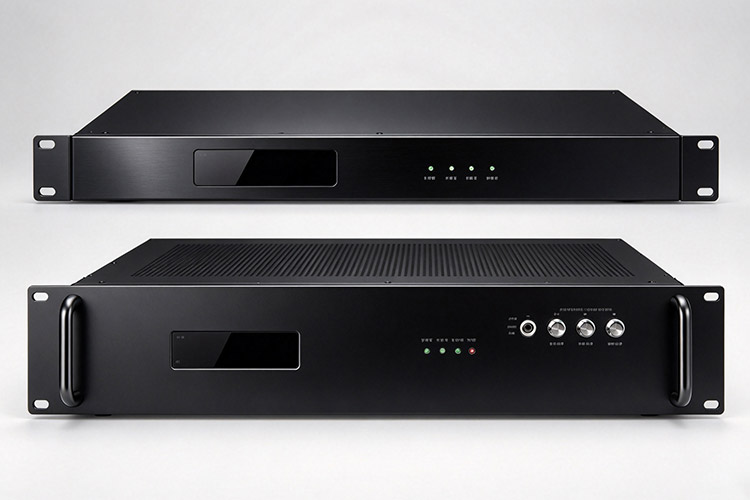
Clock Roles and Signal Meaning
“Master” and “slave” identify functional roles. They do not define a single electrical interface or message format.
A slave might receive a simple advance command, an encoded time value or repeated timing observations. Each method gives the receiving device a different amount of information.
Understanding that difference explains why some clocks need an initial position setting while others can recover their displayed time automatically.
Impulse-Controlled Clocks
In a basic impulse-controlled arrangement, an electrical pulse commands the receiving mechanism to advance by a defined amount.
The pulse provides an instruction such as “advance one step.” It may not contain an absolute time value.
If the display starts in the wrong position, receiving subsequent advance pulses does not necessarily identify or remove that error. A missed pulse may also leave the display behind until a correction procedure restores alignment.
The exact behavior depends on the movement and its correction mechanism.
Clocks Receiving Encoded Time
An encoded timing signal carries a representation of time that a receiver can decode.
The receiving electronics can compare the supplied value with the clock’s current state. This allows a supported self-setting mechanism to determine the required correction rather than relying only on a count of incoming impulses.
For an analog display, correcting the visible hands also requires a way to establish or track their position. For a digital display, the controller can update the displayed value electronically.
Advancing a Display and Correcting an Oscillator
Two different control relationships are possible.
| Control Method | Receiver Behavior |
|---|---|
| Direct advancement | The input signal commands a display movement or step |
| Local clock correction | An internal oscillator advances time, while reference updates correct it |
In the second arrangement, the clock continues running between updates. The master provides periodic corrections rather than generating every visible change.
This distinction also determines what can happen when the reference disappears.
Startup and Resynchronization
A receiver starting without valid time must establish a meaningful state before it can display the correct reference.
An absolute-time receiver may wait for a complete valid message. A pulse-driven movement may require an initial position or a defined correction sequence.
After an interruption, recovery depends on what the receiver retained and what information the master transmits. Receiving a new signal does not make every type of clock recover in the same way.
Translating an Incoming Reference into an Output
A master can obtain time through one mechanism and distribute it through another.
For example, its internal time base may follow an external reference while its output circuit generates a particular clock-control signal.
That translation has two responsibilities: preserving the time relationship and generating the correct output behavior. The master’s input format does not determine the slave’s receiving format.
Reference Loss at Different Levels
Loss of the master’s upstream reference differs from loss of the connection between master and slave.
The master may continue producing outputs from its own oscillator after its external reference is lost. A slave may therefore remain closely aligned with the master even while both move away from the original reference.
Conversely, an independently running slave can diverge from a correctly synchronized master when their connection is interrupted.
Agreement between clocks and accuracy relative to an external reference are separate properties.
For the selected slave clock, confirm whether its power arrangement permits continued display if the master stops, how loss of synchronization is indicated, and how recovery works when the reference returns. See the clock interruption and troubleshooting FAQs.
Plan Your Master and Slave Clock System
HC Electronics supplies master clocks and slave clocks for synchronized timekeeping. Share your signal type, display type and number of clocks, and our team will help match the master output to your receivers. For the complete installation, review how to plan a master clock system.
Learn more about HC Electronics or visit our contact page.